





Your shopping cart is currently empty.
Fire Safety Planning for Your Family
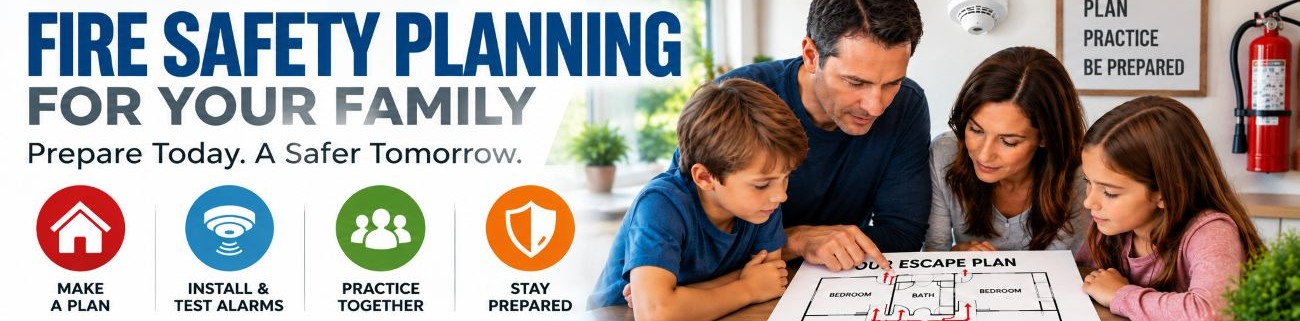
A home fire can develop quickly, leaving little time to decide what to do. A good family fire safety plan helps everyone in the household know how to recognize a fire emergency, escape safely and meet at a predetermined location outside.
Fire safety planning is more than owning a fire extinguisher or installing a smoke alarm. It includes working smoke and carbon monoxide alarms, clearly understood escape routes, regular fire drills and everyday habits that help reduce fire hazards.
The most important time to make these decisions is before an emergency occurs.
Why Every Family Needs a Home Fire Escape Plan
Modern home fires can become dangerous very quickly. Everyone in your household should know how to recognize the sound of smoke and carbon monoxide alarms, how to leave the home quickly, where to meet outside and that they should never return to a burning building.
- Know at least two ways out of each room when possible.
- Know how to quickly leave the home.
- Know where to meet outside.
- Know how to call 911 once safely outside.
- Never return to a burning building.
Children should also be taught how to escape on their own in case an adult cannot reach them.
1. Create a Home Fire Escape Plan
Walk through your home and identify possible exits from every room. Draw a simple floor plan showing bedrooms, hallways, doors, windows and stairways. Mark the primary escape route and, when possible, a second way out of each room.
Your plan should account for everyone living in the home, including children, older adults, people with disabilities and anyone who may need assistance evacuating.
Check Your Escape Routes
- Make sure doors and windows used for escape open easily.
- Keep hallways, stairways and exits free of clutter.
- Make sure security bars or similar devices have appropriate emergency-release mechanisms.
- Make sure everyone knows where exterior door keys are located when keyed locks are used.
- Evaluate secondary escape options for upper-floor bedrooms.
Important: Never assume that the route you normally use to enter and leave your home will be available during a fire. Smoke or flames may block your usual path.
2. Choose an Outside Meeting Place
Select a permanent meeting location a safe distance from the house. Examples might include a mailbox, a particular tree, a neighbor's property, a light pole or another easily recognizable landmark.
Everyone should go directly to this location after escaping. A designated meeting place allows family members to quickly determine whether everyone is accounted for and helps prevent someone from going back inside looking for a person who has already escaped.
Once you're outside, stay outside. Never reenter a burning home.
3. Install Smoke Alarms in the Right Locations
Working smoke alarms provide critical early warning of a fire. Smoke alarms should be installed inside bedrooms, outside sleeping areas and on every level of the home.
Follow the alarm manufacturer's installation instructions for exact placement.
Whenever practical, consider interconnected smoke alarms. When one interconnected alarm detects smoke, all interconnected alarms sound, helping alert people throughout the house.
Test smoke alarms monthly and replace alarms according to the manufacturer's instructions. Smoke alarms generally should be replaced when they reach 10 years of age.
Never disable a smoke alarm or remove its battery because of nuisance alarms from cooking or steam. Address the source of the problem or follow the manufacturer's recommendations for proper placement.
4. Don't Forget Carbon Monoxide Alarms
Carbon monoxide, or CO, is an odorless and colorless poisonous gas that cannot be detected by human senses.
Carbon monoxide alarms should be installed on every level of the home and outside sleeping areas, following the manufacturer's instructions.
CO can be produced by fuel-burning equipment and appliances such as furnaces, fireplaces, water heaters, generators and other fuel-burning appliances.
If a carbon monoxide alarm sounds, move everyone outside to fresh air and contact emergency services. Do not remain inside searching for the source of the carbon monoxide.
5. Practice Your Family Fire Escape Plan
A plan is much more useful when everyone has practiced it. Conduct home fire drills so household members become familiar with their escape routes and outdoor meeting location.
- Activate the smoke alarm's test button to begin the drill.
- Have everyone follow the planned escape route.
- Practice alternate escape routes when appropriate.
- Meet at the designated outdoor meeting place.
- Make sure everyone can be accounted for.
6. Teach Children What to Do During a Fire
- Recognize the sound of the smoke alarm.
- Leave immediately when the alarm sounds.
- Follow the planned escape route.
- Get low when necessary to avoid smoke.
- Go directly to the family's meeting place.
- Never hide from firefighters.
- Never return inside for toys, pets or belongings.
Children should understand that firefighters wearing protective equipment may look or sound frightening but are there to help them.
7. Plan for Anyone Who May Need Assistance
Your fire plan should consider the individual needs of everyone in the household, including infants, young children, older adults, people with mobility limitations and people who may need help waking or evacuating.
Assign assistance responsibilities in advance rather than trying to decide who will help whom during an emergency.
8. Consider Fire Escape Ladders for Upper Floors
Bedrooms located above ground level may require additional escape planning. A properly selected fire escape ladder can provide an alternative exit from certain upper-floor windows when the normal path through the home is blocked.
- Select a ladder appropriate for the window and building height.
- Store it where it can be reached quickly.
- Make sure household members understand how it works.
- Read and follow the manufacturer's instructions.
Remember: An escape ladder is a secondary escape option. It is not a substitute for working smoke alarms or a comprehensive family escape plan.
9. Use Fire Extinguishers Appropriately
Portable fire extinguishers can be useful for certain small, contained fires, but escaping safely should always take priority over fighting a fire.
- The fire is small and contained.
- Everyone else is leaving or has left the home.
- Someone has called or is calling the fire department.
- You have the correct type of extinguisher.
- You understand how to operate it.
- Smoke and heat are not creating dangerous conditions.
- You have a clear escape route behind you.
If the fire is spreading, producing significant smoke or cannot be extinguished immediately, leave the building and call 911 from a safe location.
10. Reduce Cooking Fire Hazards
- Stay in the kitchen when frying, grilling or cooking food at high temperatures.
- Keep combustible materials away from burners and cooking surfaces.
- Keep appliance surfaces clean of accumulated grease.
- Keep children and pets away from hot cooking areas.
- Turn pot and pan handles inward where they cannot easily be knocked over.
- Never leave high-risk cooking unattended.
For a small grease fire in a pan, if it can be done safely, turn off the heat and cover the pan with a lid to smother the flames. Never pour water on a grease fire.
11. Reduce Electrical Fire Hazards
- Damaged electrical cords
- Loose or damaged outlets
- Overloaded receptacles
- Improper use of extension cords
- Electrical equipment that becomes unusually hot
- Flickering lights or frequently tripped circuit breakers
Extension cords should generally be used as temporary wiring rather than as permanent substitutes for properly installed receptacles. Electrical problems involving household wiring should be evaluated by a qualified electrician.
12. Practice Safe Heating and Fireplace Use
- Keep portable heaters away from bedding, furniture, curtains, clothing and paper.
- Follow the manufacturer's required clearance distances.
- Have fuel-burning heating equipment, chimneys and vents properly inspected and maintained.
- Never use an oven or gas range to heat your home.
- Never operate a portable generator inside a house, garage or other enclosed area.
13. Include Pets in Your Fire Safety Planning
- Keep collars and identification information current.
- Know common hiding locations.
- Include pets in household evacuation planning when they can be evacuated safely.
- Tell firefighters if a pet may still be inside.
Human evacuation should never be delayed while searching for an animal during an active fire.
What to Do If a Fire Occurs
If a smoke alarm sounds or you discover a fire, get out immediately.
- Follow your planned escape route.
- Close doors behind you as you leave when possible.
- Use your planned secondary exit if smoke blocks your primary route.
- Go directly to your designated outdoor meeting place.
- Stay outside.
- Account for household members.
- Call 911 from a safe location.
- Tell firefighters if someone may still be inside.
- Never go back into the building for people, pets or belongings.
Home Fire Safety Checklist
Use this checklist to periodically review your family's preparedness.
| Fire Safety Item | Check |
|---|---|
| Smoke alarms are installed inside and outside sleeping areas and on every level. | ☐ |
| Smoke alarms are tested monthly. | ☐ |
| Smoke alarms are within their recommended service life. | ☐ |
| CO alarms are installed on every level and outside sleeping areas. | ☐ |
| Everyone knows two ways out of each room when possible. | ☐ |
| Doors, windows and escape routes are unobstructed. | ☐ |
| Family members know the outdoor meeting place. | ☐ |
| Everyone understands never to reenter a burning home. | ☐ |
| Children know what the smoke alarm sounds like. | ☐ |
| Household members who need evacuation assistance have a plan. | ☐ |
| Upper-floor escape options have been evaluated. | ☐ |
| Fire extinguishers are appropriate, accessible and maintained. | ☐ |
| Electrical cords and outlets are checked for damage. | ☐ |
| Heating equipment is kept clear of combustible materials. | ☐ |
| The family has practiced its fire escape plan. | ☐ |
Frequently Asked Questions About Family Fire Safety
How many ways out of each room should be included in a fire escape plan?
When possible, identify at least two ways out of every room. The second exit is important because smoke or fire could block the primary route.
Where should smoke alarms be installed?
Smoke alarms should be installed inside bedrooms, outside sleeping areas and on every level of the home. Follow the manufacturer's instructions for exact placement.
How often should smoke alarms be tested?
Test smoke alarms every month using the test button and follow the manufacturer's maintenance instructions.
How often should smoke alarms be replaced?
Smoke alarms do not last indefinitely. Replace alarms according to the manufacturer's instructions and recommended service life.
Should I try to put out a house fire with a fire extinguisher?
Evacuation is the priority. Portable extinguishers should only be considered for small, contained fires when conditions are safe, the proper extinguisher is available and there is a clear escape route. When in doubt, get out and call 911.
Make Fire Safety Part of Your Family Routine
Home fire safety is not something to think about only after purchasing a smoke alarm or fire extinguisher. A comprehensive approach combines prevention, early warning and a practiced escape plan.
Periodically walk through your home, test your alarms, look for new hazards and review your escape plan with everyone in the household. A few minutes spent preparing today can make an enormous difference when every second matters.
Recommended Sources
For additional information about home fire prevention and emergency preparedness, consult these authoritative resources:
- U.S. Fire Administration (USFA): Home Fire Escape Plans
- U.S. Fire Administration (USFA): Smoke Alarms
- U.S. Consumer Product Safety Commission (CPSC): Carbon Monoxide Alarms
- National Fire Protection Association (NFPA): Home Fire Safety
Fire safety requirements can vary by jurisdiction. Always follow applicable building and fire codes, product instructions and guidance from your local fire authority.
