












Your shopping cart is currently empty.
Cut Resistant Gloves
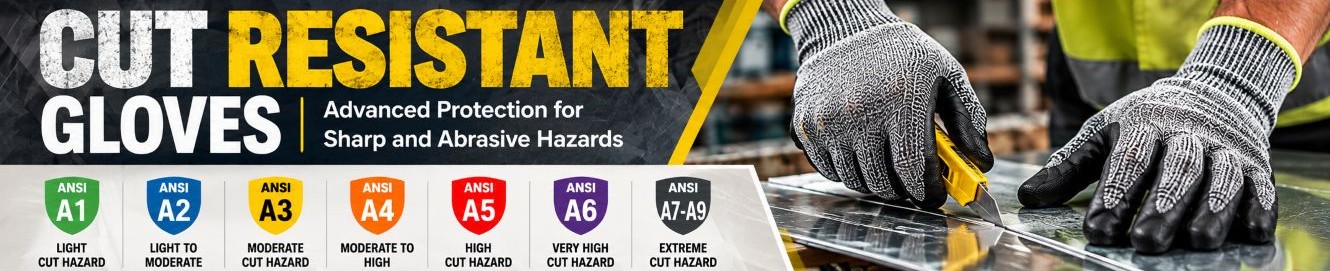
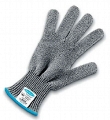
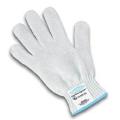
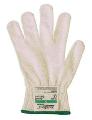
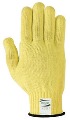
Cut resistant gloves help protect workers handling sharp metal, glass, sheet materials, blades, parts and other objects that can create cut and laceration hazards. Select Safety Sales offers industrial cut protection for manufacturing, construction, fabrication, warehousing, maintenance, recycling and material-handling applications.
Shop gloves by ANSI cut level from A2 through A9, along with cut and impact resistant gloves, cut and puncture resistant gloves and protective sleeves. Available styles include lightweight high-dexterity gloves and heavier-duty protection with nitrile, foam nitrile, polyurethane and other palm coatings.
Purchasing cut resistant gloves for a workforce? Select Safety Sales works with commercial, industrial, construction, institutional and government buyers requiring case quantities, larger orders and ongoing PPE supplies.
Choose an ANSI cut level or specialized cut-protection category below to compare gloves for your application.
Choosing the Right Cut Resistant Gloves
Cut resistant gloves are designed to help reduce the risk of hand injuries when workers handle sharp or abrasive materials. Applications range from opening cartons and handling parts with rough edges to working with sheet metal, glass, fabricated components and other materials capable of causing serious lacerations.
The correct glove should be selected according to the actual hazard and task. ANSI cut level is an important starting point, but buyers should also consider abrasion and puncture hazards, palm coating, grip, glove gauge, dexterity, working conditions and any additional protection required.
Important: Cut resistant does not mean cut proof. No protective glove can eliminate every possibility of a cut injury. Select gloves based on the hazards identified for the task and follow appropriate workplace safety procedures.
Understanding ANSI Cut Levels A1-A9
ANSI/ISEA 105 provides a standardized system for classifying cut resistance. The current scale includes nine levels, from A1 through A9. As the rating increases, the amount of force required to cut through the tested material increases.
| ANSI Cut Level | Cut Resistance | General Selection Range |
|---|---|---|
| A1 | 200-499 grams | Very light cut exposure |
| A2 | 500-999 grams | Light cut exposure |
| A3 | 1,000-1,499 grams | Light to moderate cut exposure |
| A4 | 1,500-2,199 grams | Moderate cut exposure |
| A5 | 2,200-2,999 grams | Moderate to higher cut exposure |
| A6 | 3,000-3,999 grams | Higher cut exposure |
| A7 | 4,000-4,999 grams | High cut exposure |
| A8 | 5,000-5,999 grams | Very high cut exposure |
| A9 | 6,000+ grams | Highest ANSI cut-resistance range |
The ANSI rating provides a useful way to compare tested cut resistance, but it should not be used by itself to determine whether a glove is appropriate for a particular job. The glove's complete performance characteristics should be evaluated against the task and workplace hazards.
Which ANSI Cut Level Do I Need?
There is no single ANSI cut level that is correct for every occupation or job title. Two workers in the same facility may require different gloves depending on the materials they handle and the way the work is performed.
ANSI A2-A3 Cut Resistant Gloves
A2 and A3 gloves provide lower to moderate levels of cut resistance and can be appropriate where workers need protection from lighter cut hazards while maintaining excellent dexterity and tactile control. Applications can include parts handling, assembly, warehouse work, packaging and general material handling where sharp edges are present.
ANSI A4 Cut Resistant Gloves
A4 gloves provide a step up in cut resistance while many modern designs still offer good flexibility and dexterity. They are commonly considered for construction, maintenance, manufacturing, material handling and jobs involving moderately sharp components or edges.
ANSI A5 Cut Resistant Gloves
A5 is a versatile mid-to-higher cut-protection level used across many industrial environments. Depending on the glove construction, A5 gloves can provide a useful balance of protection, grip and dexterity for fabrication, metal handling, construction, maintenance and manufacturing.
ANSI A6 Cut Resistant Gloves
A6 gloves provide higher cut resistance for more demanding work involving sharp materials. Applications may include metal fabrication, sheet-metal handling, glass handling and other industrial operations where increased cut protection is required.
ANSI A7 Cut Resistant Gloves
A7 gloves are intended for higher cut-hazard applications where substantial cut resistance is needed. They may be considered for metal processing, fabrication, recycling, automotive operations and handling sharp industrial materials.
ANSI A8-A9 Cut Resistant Gloves
A8 and A9 represent the highest ranges on the ANSI cut-resistance scale. These gloves are intended for demanding applications where the hazard assessment identifies the need for very high cut resistance. Glove construction, grip, puncture resistance and dexterity remain important even at these higher protection levels.
ANSI Cut Level Comparison
| Cut Level | Examples of Applications to Evaluate | Other Features to Consider |
|---|---|---|
| A2-A3 | Assembly, packaging, parts handling and warehouse operations | Dexterity, tactile sensitivity and lightweight coatings |
| A4 | Construction, maintenance, manufacturing and general metal handling | Grip, abrasion resistance and flexibility |
| A5 | Fabrication, sheet materials, construction and industrial maintenance | Cut protection, grip and dexterity balance |
| A6 | Sharp metal, glass and more demanding fabrication work | Coating, puncture resistance and durability |
| A7 | Metal processing, recycling and higher-hazard industrial handling | Cut, abrasion, puncture and impact protection |
| A8-A9 | Very high cut-hazard industrial applications | Complete hazard assessment, grip, puncture protection and dexterity |
Cut Resistance vs. Puncture Resistance
Cut resistance and puncture resistance are different performance characteristics. A glove with a high ANSI cut rating should not automatically be assumed to provide an equally high level of puncture protection.
This distinction is particularly important when workers encounter wire, metal burrs, sharp points, fasteners or other objects capable of penetrating glove material. Applications involving both hazards should be evaluated for both cut and puncture performance.
Cut protection and needlestick protection are also not the same. Applications involving hypodermic needles or similar fine-point hazards require products specifically evaluated for that type of puncture exposure.
Cut and Impact Resistant Gloves
Some workplaces expose employees to both sharp materials and impact hazards. Cut and impact resistant gloves combine cut-resistant materials with protective structures across areas such as the fingers, knuckles and back of the hand.
These combination gloves may be appropriate for construction, heavy manufacturing, oil and gas, material handling and other applications where workers need protection against more than one mechanical hazard.
Glove Gauge, Dexterity and Cut Protection
Glove gauge describes the density of a knitted glove liner. Modern glove technology has made it possible to provide substantial cut resistance in increasingly lightweight constructions.
Higher-gauge gloves are generally thinner and can provide excellent dexterity for handling small components and performing detailed work. Heavier constructions may be preferred where durability, additional protection or particular working conditions are more important.
Gauge should therefore be considered together with ANSI cut level rather than being treated as a measure of protection by itself.
Choosing a Palm Coating
Many cut resistant gloves use a coated palm to improve grip and durability. The best coating depends on the surfaces being handled and the working environment.
| Palm Coating | Common Characteristics | Applications to Consider |
|---|---|---|
| Foam Nitrile | Flexible with good grip and abrasion resistance | Assembly, fabrication, material handling and manufacturing |
| Nitrile | Durable coating with useful abrasion and oil resistance | Industrial handling, maintenance and metal work |
| Polyurethane (PU) | Thin coating offering excellent tactile sensitivity | Precision assembly and small-part handling |
| Latex | Flexible coating with strong grip characteristics | Construction and handling rough materials |
Common Applications for Cut Resistant Gloves
Cut resistant gloves are used throughout workplaces where employees handle sharp, unfinished or abrasive materials. Common applications include:
- Sheet-metal fabrication and handling
- Glass handling and manufacturing
- Construction and building trades
- Automotive manufacturing and repair
- Metal stamping and machining
- Recycling and waste handling
- Warehouse and material handling
- Maintenance and repair operations
- Assembly and parts handling
- HVAC and mechanical work
The application alone does not determine the correct ANSI rating. Employers should evaluate the actual materials, edges, tools, movements and exposure conditions involved in the task.
OSHA Hand Protection Requirements
OSHA 29 CFR 1910.138 requires employers to select and require appropriate hand protection when employees' hands are exposed to hazards including severe cuts or lacerations, severe abrasions and punctures. OSHA also requires selection to be based on the performance characteristics of the hand protection relative to the tasks performed, conditions present, duration of use and identified hazards.
ANSI cut ratings can help employers compare glove performance, but they do not replace the workplace hazard assessment or the need to evaluate the glove for the actual task.
Cut Resistant Gloves for Commercial and Industrial Buyers
Select Safety Sales supplies cut resistant gloves for manufacturing plants, construction companies, government agencies, schools and universities, utilities, warehouses, maintenance departments and other organizations.
For workforce purchases, consider standardizing glove styles around common job functions and hazard levels. Selecting appropriate ANSI levels, coatings and size ranges can help simplify purchasing while providing workers with hand protection suited to their tasks.
Purchasing cut resistant gloves in quantity?
Contact Select Safety Sales for assistance with case quantities, larger orders and recurring glove requirements for commercial, industrial, institutional and government facilities.
Frequently Asked Questions About Cut Resistant Gloves
What do ANSI A1-A9 glove ratings mean?
ANSI A1 through A9 are standardized cut-resistance classifications. Higher numbers indicate greater measured resistance to cutting under the applicable test method. A1 begins at 200 grams, while A9 represents 6,000 grams or more.
What is the most common ANSI cut level?
There is no single ANSI rating appropriate for every workplace. Many industrial applications fall within the middle portion of the scale, but the correct rating should be based on the actual cut hazard, task and working conditions rather than popularity alone.
Are A5 gloves better than A4 gloves?
A5 gloves provide a higher tested level of cut resistance than A4 gloves, but that does not automatically make them better for every application. An A4 glove may provide the protection required for a particular task while offering the grip, dexterity or comfort preferred by the worker.
Does a higher ANSI rating mean a thicker glove?
Not necessarily. Modern cut-resistant fibers and knitting technologies can provide high levels of cut resistance in relatively thin gloves. Check glove gauge, materials and construction in addition to the ANSI rating.
Are cut resistant gloves cut proof?
No. Cut resistant gloves are designed to reduce cut risk, but no glove should be considered completely cut proof. Proper glove selection, hazard controls and safe work practices remain necessary.
Are cut resistant gloves puncture resistant?
Cut and puncture resistance are separate properties. A glove may perform strongly in one area without providing the same level of protection in the other. Review the applicable product ratings when puncture hazards are present.
What coating is best for cut resistant gloves?
The best coating depends on the task. Polyurethane can provide excellent dexterity, foam nitrile is popular for grip and flexibility, nitrile can provide good durability and abrasion resistance, and latex can provide strong grip for certain handling applications.
When should I use cut and impact resistant gloves?
Combination cut and impact gloves should be considered when workers face both sharp-material hazards and potential blows or impacts to the fingers or back of the hand. The appropriate ratings should be evaluated for both hazards.
Need Help Selecting Cut Resistant Gloves?
Choosing between ANSI cut levels, coatings, glove gauges and combination cut, puncture or impact protection can be difficult when outfitting a workforce.
Select Safety Sales can help commercial, industrial, institutional and government buyers compare cut resistant gloves and identify options appropriate for their purchasing requirements.
Call Select Safety Sales at 866-864-3495 for product assistance, quantity pricing or bulk-order requirements.
